






-
뉴스
-
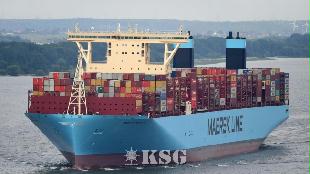
- Maersk and PUMA Expand Partnership to Unlock Greate...
- A.P. Moller - Maersk (Maersk) today announced it has begun managing PUMA’s North America distribution network, which includes three large, highly automated warehouses in California, Arizona, and Indiana totaling about 2.3 million square feet. PUMA, one of the world...
-
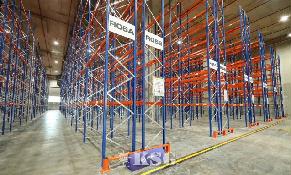
- DP World Expands Contract Logistics Network In Thai...
- DP World today announced the opening of a new contract logistics distribution centre in Bang Na, expanding its logistics capacity in Thailand and strengthening its ability to support customers across key manufacturing and consumer sectors. The approximately 10,000-squa...
-
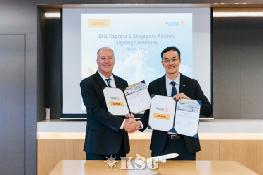
- DHL Express and Singapore Airlines Extend Boeing 77...
- DHL Express and Singapore Airlines (SIA) have renewed their crew and maintenance agreement for five Boeing 777 freighters based at Singapore Changi Airport. Under the agreement, SIA pilots will continue to operate the five freighters, while SIA engineers will oversee t...
-
- Ocean Network Express Publishes Sustainability Repo...
- Ocean Network Express (ONE) has published its Sustainability Report 2026, covering the period from 1 April 2025 to 31 March 2026. The report highlights ONE's progress and initiatives across four sustainability pillars: Environment, Operational Excellence, Social, a...
-
- 운항스케줄
-
오피니언
























2001-06-01 17:10
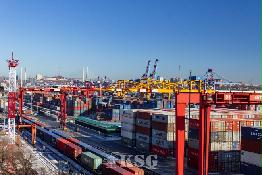
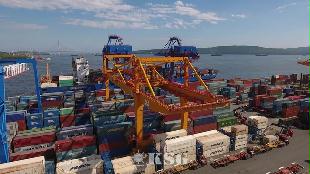
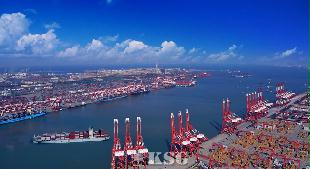
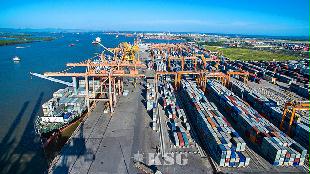
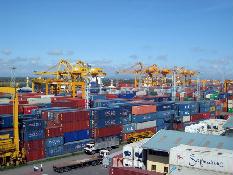
Ports in Pusan and Kwangyang have to be developed without political af


Discussions on delicate matters such as acquisition of port facilities, ocean safety, and maritime pollution met with conflict in a parliamentary inspection.
During a parliamentary audit of the Ministry of Maritime Affairs and Fisheries by members of the National Assembly's Agriculture and Maritime Affairs and Fisheries Committee October 31st, legislators spent most of their time criticizing MOMAF Minister, Noh Moo-hyon, instead of discussing maritime issues.
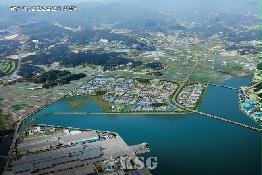
A group of lawmakers criticized plans for the early development of the Kwangyang and Pusan New Port, reasons for the failure to raise private capital for the Pusan New Port, how far to proceed with Port Authorities (PA), and the impropriety of applying the 200 percent debt to asset ratio to the shipping industry.
Rep. Huh Tae-yeol of the opposition Grand National Party (GNP) pointed out what the problem is in raising private capital for the Pusan New Port and asked about appropriate measures to get out of the stern 200 percent guideline. Mr. Huh indicated that the Pusan New Port plan is a national project with the purpose of building a complex international logistic port to handle increasing cargoes in the Port of Pusan. It, however, was pointed out that the Pusan New Port plan didn't reflect the tendency towards larger vessels in line with more advanced ship building techniques. So the first step to build nine 50,000-ton berths is inappropriate for vessels larger than 8,000 TEU, which will be the common size entering the 21st century. He said that the berths for 50,000-ton vessels are only suitable for the vessels being released right now.
He also criticized that the 200 percent debt to asset guideline for the 5 big groups and 64 affiliated companies was rigidly applied to the shipping industry, decreasing the competitiveness of Korean shipping companies. Most Korean shipping companies sold vessels to satisfy the criteria, sustaining losses because of falling international ship prices.
In case of the Port Authority, it was indicated that it is prerequisite for building bodies to equally take part in it, to be run autonomously, and to be operated independently. Also it is arguable whether the Port Authority manages Pusan New Port or not.
Rep. Jeong Jang-sun of the ruling Millennium Democratic Party emphasized that the Port Authority system shouldn't be introduced rough-and-ready. He suggested that Port Authorities are a global tendency in terms of port evolution, but they have to be pursued considering each country's specific situation, citing that the main factors for port evolution are regulation loosening, industrialization, and privatization.
The TOC (Terminal Operating Company) system in 37 piers at 9 Ports in Korea have been surprisingly successful to date with productivity up 12.5 percent, and detention ratios down 21.1 percent.
He added that raising private capital for the Pusan New Port didn't work well because there were problems in acquiring port facilities and that necessitated reconsidering large portions of the project. The government planned to raise 10,170 billion won of total building cost of 17,700 from private capital. But it failed to raise the money resulting in failure for the Pusan New Port.
He pointed out that the problems the government made are like that, first, pursuing private capital without pre-analysis of the project, and second, the project scope is too large for private capital.
During a parliamentary audit of the Ministry of Maritime Affairs and Fisheries by members of the National Assembly's Agriculture and Maritime Affairs and Fisheries Committee October 31st, legislators spent most of their time criticizing MOMAF Minister, Noh Moo-hyon, instead of discussing maritime issues.
A group of lawmakers criticized plans for the early development of the Kwangyang and Pusan New Port, reasons for the failure to raise private capital for the Pusan New Port, how far to proceed with Port Authorities (PA), and the impropriety of applying the 200 percent debt to asset ratio to the shipping industry.
Rep. Huh Tae-yeol of the opposition Grand National Party (GNP) pointed out what the problem is in raising private capital for the Pusan New Port and asked about appropriate measures to get out of the stern 200 percent guideline. Mr. Huh indicated that the Pusan New Port plan is a national project with the purpose of building a complex international logistic port to handle increasing cargoes in the Port of Pusan. It, however, was pointed out that the Pusan New Port plan didn't reflect the tendency towards larger vessels in line with more advanced ship building techniques. So the first step to build nine 50,000-ton berths is inappropriate for vessels larger than 8,000 TEU, which will be the common size entering the 21st century. He said that the berths for 50,000-ton vessels are only suitable for the vessels being released right now.
He also criticized that the 200 percent debt to asset guideline for the 5 big groups and 64 affiliated companies was rigidly applied to the shipping industry, decreasing the competitiveness of Korean shipping companies. Most Korean shipping companies sold vessels to satisfy the criteria, sustaining losses because of falling international ship prices.
In case of the Port Authority, it was indicated that it is prerequisite for building bodies to equally take part in it, to be run autonomously, and to be operated independently. Also it is arguable whether the Port Authority manages Pusan New Port or not.
Rep. Jeong Jang-sun of the ruling Millennium Democratic Party emphasized that the Port Authority system shouldn't be introduced rough-and-ready. He suggested that Port Authorities are a global tendency in terms of port evolution, but they have to be pursued considering each country's specific situation, citing that the main factors for port evolution are regulation loosening, industrialization, and privatization.
The TOC (Terminal Operating Company) system in 37 piers at 9 Ports in Korea have been surprisingly successful to date with productivity up 12.5 percent, and detention ratios down 21.1 percent.
He added that raising private capital for the Pusan New Port didn't work well because there were problems in acquiring port facilities and that necessitated reconsidering large portions of the project. The government planned to raise 10,170 billion won of total building cost of 17,700 from private capital. But it failed to raise the money resulting in failure for the Pusan New Port.
He pointed out that the problems the government made are like that, first, pursuing private capital without pre-analysis of the project, and second, the project scope is too large for private capital.


선박운항스케줄
인기 스케줄
-
BUSAN
 JEDDAH
선박운항스케줄 목록 - 선박운항스케줄목록으로 Vessel, D-Date, A-Date, Agent를 나타내는 테이블입니다. Vessel D-Date A-Date Agent Xin Chang Shu 10/26 12/10 ESL Kmtc Mundra 10/28 12/12 ESL Song Yun He 10/30 12/21 KWANHAE SHIPPING -
INCHEON
DAVAO선박운항스케줄 목록 - 선박운항스케줄목록으로 Vessel, D-Date, A-Date, Agent를 나타내는 테이블입니다. Vessel D-Date A-Date Agent Ever Vista 11/06 11/30 Evergreen Ever Certain 11/10 11/27 Evergreen -
BUSAN
NAGOYA선박운항스케줄 목록 - 선박운항스케줄목록으로 Vessel, D-Date, A-Date, Agent를 나타내는 테이블입니다. Vessel D-Date A-Date Agent Progress 10/20 10/23 Taiyoung Pegasus Peta 10/20 10/24 Pan Star Dongjin Fortune 10/20 10/24 Pan Star -
BUSAN
TOKYO선박운항스케줄 목록 - 선박운항스케줄목록으로 Vessel, D-Date, A-Date, Agent를 나타내는 테이블입니다. Vessel D-Date A-Date Agent Ty Incheon 10/19 10/21 KMTC Pegasus Peta 10/20 10/22 Pan Star Dongjin Fortune 10/20 10/22 Pan Star -
MASAN
VANCOUVER B.C.선박운항스케줄 목록 - 선박운항스케줄목록으로 Vessel, D-Date, A-Date, Agent를 나타내는 테이블입니다. Vessel D-Date A-Date Agent Asian Naga 11/25 12/26 ECL Korea
- 출발항
-
- 도착항
-


많이 본 기사
- 컨운임지수 소폭 상승…유럽 3개월만에 반등대한항공, 3분기 매출 ‘역대 최대’…5조원 돌파해운협회 부산본부, 선사 AI 전환 지원 구체화…부산산업진흥원과 MOU부음/ 팬오션 장석각 본부장 모친상세계 100대 항만 물동량 8억TEU 눈앞…亞 성장세 뚜렷태국 RCL, 컨선 확대 박차…현존선단 160% 발주LX판토스, 청라에 로봇·AI 물류기술 실증 거점 개소두핸즈 품고, 인도시장 진출 실전 웨비나 개최싸이버로지텍, 도루코 베트남 창고관리시스템 디지털전환 돕는다광양경자청, 해양플랜트산업전서 글로벌 조선사 겨냥 투자유치 나서
- DP월드, 아태지역 CEO에 제이슨 바르사미디스 선임해운중개업협회, 내달 선박거래와 해운중개 실무교육DP월드, 부산 터미널에 전기 야드트랙터 55대 도입IPA, 만트럭버스코리아와 아암물류2단지서 화물차 무상 정비삼성重, 노르웨이선급서 탱크선 하이브리드 시스템 기본인증 획득국고 지원해 제주-추자-완도 여객선항로 중단 막는다여수광양항만공사, 세풍항만배후단지 입주기업 모집대한항공, 국제 여행산업 시상식서 8개상 수상해양진흥공사, 내달 16일까지 해양사진 공모…총상금 3000만원HD현대삼호, 목포해양대·목포대에 발전기금 6000만원 기탁


스케줄 많이 검색한 항구

해사물류 통계 





COPYRIGHTⓒ 2014 KOREA SHIPPING GAZETTE. ALL RIGHTS RESERVED.

COPYRIGHTⓒ 2015
KOREA SHIPPING GAZETTE. ALL RIGHTS RESERVED.
0/250
확인