





-
뉴스
-
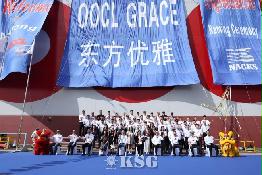
- OOCL Names OOCL Grace, Its Second 24,000TEU Methano...
- ??Orient Overseas Container Line Ltd. (OOCL) today held the naming ceremony for OOCL Grace, the company's second methanol dual-fuel container vessel. The naming ceremony was held at the shipyard of Nantong COSCO KHI Ship Engineering Co., Ltd. (“NACKS"). Ms. Annet...
-
- Höegh Autoliners Orders Six Additional Aurora Clas...
- Höegh Autoliners ASA is pleased to announce that it has decided to order six additional new dual-fuel LNG and zero-carbon-ready Aurora class vessels for delivery in 2029–2031. This decision will extend Höegh Autoliners’ Aurora class newbuilding progra...
-
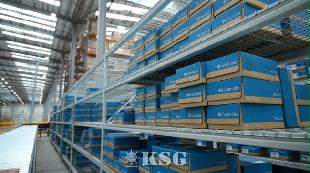
- Maersk Expands Partnership With Columbia Sportswear...
- A.P. Moller - Maersk (Maersk) has signed a new agreement with Columbia Sportswear Company (Columbia), a global leader in outdoor, active and lifestyle products, to provide warehousing and distribution services for its Pick & Pack operations in the United Kingdom and Ir...
-
- Munich Airport and Lufthansa Expand Stopover Offer ...
- The Lufthansa Stopover Program—a collaboration between Munich Airport and Lufthansa—is being expanded: effective immediately, the offer is also available to Lufthansa passengers traveling from China, India, Japan, South Korea, and Thailand. Travelers from t...
-
- 운항스케줄
-
오피니언














2001-02-20 09:34
Chinese-speaking areas might be the biggest export markets of $43.3billion this year


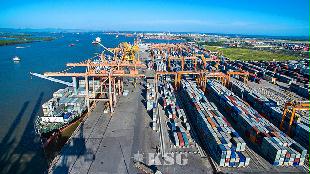
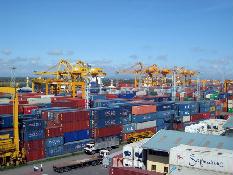
Chinese-speaking countries seem to stand out as the biggest export markets and trade surplus areas this year, said the Bank of Korea (BOK).
The BOK reported that exports to Chinese-speaking regions stand at $43.3billion, up about 14 percent. Especially, the Republic of China, which occupied half of the exports, is expected to maintain an 8 percent growth rate for two years, in part due to the aid of entrance to the World Trade Organization, propelling development policies in the West and fostering state of the art technology industries.
As the competition, however, with advanced countries, including Japan, is increasing more and more, there might be a need to prepare trade infrastructure establishments, distinctive export strategies, a fundamental reinforcement of export industries, and consumer goods for Chinese income increases.
To establish the trade infrastructure, there is a need for Chinese interpretation on the internet for traders not qualified with English-language skills, in order to be ready for e-commerce trades between China and Korea, and to interact with Chinese dedicated export companies.
Meanwhile, consumption levels in 2000 increased 4 fold over 1999 as China received more money due to continuous economic development. However, its electronic goods provision rates such as personal computers, cell phones, air-conditioners, and a passenger cars stood at pretty high levels. For these products, which are predicted to grow sharply hereafter, Korean companies are required to develop marketing strategies fitted for consumption patterns, for example, to establish distribution chains centered on mid or high-cost goods and to intensify after-sales service.
In addition, as the Chinese domestic market opens up in accordance with its entrance to the WTO, competition between international companies in China and local businesses will soar and export expansion depending on discounts will come to an end. Now is the time for Korean companies to rejuvenate their images through competitive goods and top-of-the-line designs.
Also, Korean exports to Chinese-speaking areas concentrate on extensively providing a few items such as information technology, semi-conductors, chemicals, and steel. This tendency might break import sanctions and cannot flexibly respond with circumstantial changes, resulting in it being continuously harder to increase exports.
For instance, in 2000, export prices for semi-conductors and information technology (IT) products rapidly dropped, resulting in drastic export decreases and a deteriorating trade balance. To prevent this, diversification of export products might be seriously needed, commented an official.
The BOK reported that exports to Chinese-speaking regions stand at $43.3billion, up about 14 percent. Especially, the Republic of China, which occupied half of the exports, is expected to maintain an 8 percent growth rate for two years, in part due to the aid of entrance to the World Trade Organization, propelling development policies in the West and fostering state of the art technology industries.
As the competition, however, with advanced countries, including Japan, is increasing more and more, there might be a need to prepare trade infrastructure establishments, distinctive export strategies, a fundamental reinforcement of export industries, and consumer goods for Chinese income increases.
To establish the trade infrastructure, there is a need for Chinese interpretation on the internet for traders not qualified with English-language skills, in order to be ready for e-commerce trades between China and Korea, and to interact with Chinese dedicated export companies.
Meanwhile, consumption levels in 2000 increased 4 fold over 1999 as China received more money due to continuous economic development. However, its electronic goods provision rates such as personal computers, cell phones, air-conditioners, and a passenger cars stood at pretty high levels. For these products, which are predicted to grow sharply hereafter, Korean companies are required to develop marketing strategies fitted for consumption patterns, for example, to establish distribution chains centered on mid or high-cost goods and to intensify after-sales service.
In addition, as the Chinese domestic market opens up in accordance with its entrance to the WTO, competition between international companies in China and local businesses will soar and export expansion depending on discounts will come to an end. Now is the time for Korean companies to rejuvenate their images through competitive goods and top-of-the-line designs.
Also, Korean exports to Chinese-speaking areas concentrate on extensively providing a few items such as information technology, semi-conductors, chemicals, and steel. This tendency might break import sanctions and cannot flexibly respond with circumstantial changes, resulting in it being continuously harder to increase exports.
For instance, in 2000, export prices for semi-conductors and information technology (IT) products rapidly dropped, resulting in drastic export decreases and a deteriorating trade balance. To prevent this, diversification of export products might be seriously needed, commented an official.


선박운항스케줄
인기 스케줄
-
BUSAN
 ROTTERDAM
선박운항스케줄 목록 - 선박운항스케줄목록으로 Vessel, D-Date, A-Date, Agent를 나타내는 테이블입니다. Vessel D-Date A-Date Agent Ever Vert 10/01 11/10 Evergreen One Intelligence 10/03 11/22 Tongjin One Intelligence 10/03 11/22 Tongjin -
BUSAN
KHOR FAKKAN선박운항스케줄 목록 - 선박운항스케줄목록으로 Vessel, D-Date, A-Date, Agent를 나타내는 테이블입니다. Vessel D-Date A-Date Agent Kmtc Dammam 09/24 10/20 FARMKO GLS Esl Khor Fakkan 09/26 10/18 ESL Esl Khor Fakkan 09/26 10/19 FARMKO GLS -
BUSAN
SOHAR선박운항스케줄 목록 - 선박운항스케줄목록으로 Vessel, D-Date, A-Date, Agent를 나타내는 테이블입니다. Vessel D-Date A-Date Agent Kmtc Dammam 09/24 11/18 BEN LINE Esl Khor Fakkan 09/26 10/23 ESL Esl Khor Fakkan 09/26 10/24 KOREA SHIPPING -
BUSAN
JEBEL ALI선박운항스케줄 목록 - 선박운항스케줄목록으로 Vessel, D-Date, A-Date, Agent를 나타내는 테이블입니다. Vessel D-Date A-Date Agent Kmtc Dammam 09/24 10/29 BEN LINE Esl Khor Fakkan 09/26 10/18 KWANHAE SHIPPING Esl Khor Fakkan 09/26 10/20 ESL -
BUSAN
NINGBO-ZHOUSHAN선박운항스케줄 목록 - 선박운항스케줄목록으로 Vessel, D-Date, A-Date, Agent를 나타내는 테이블입니다. Vessel D-Date A-Date Agent Kmtc Shanghai 09/22 09/27 KMTC Erasmus Icon 09/23 09/25 MAERSK LINE Easline Kwangyang 09/23 09/25 EAS SHIPPING KOREA
- 출발항
-
- 도착항
-





많이 본 기사
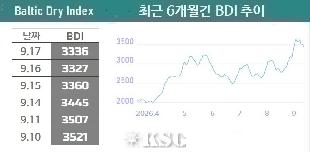
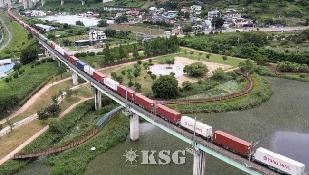
- 亞 항만 10척 중 6척 지각…운임지수 4년來 최고치로지스올, 日 물류박람회 참가…현지 사업 확대 모색中-라오스 정기화물열차 운송량 9000만t 돌파中 코스코, 운임 하락에도 상반기 영업익 2.9조 달성대한항공·아시아나 마일리지 통합안 확정<스텔라데이지>호 침몰 폴라리스쉬핑 김완중 회장 금고 2년 ‘감형...UPS, 아시아·태평양 신임 사장에 버나드 장 선임BDI 3336포인트…케이프선 시장서 반등 기세 보여한국파렛트풀, 아시아 물류 표준화 공로로 협회 감사패한국해양대, 해양환경공단과 예선 안전 시뮬레이션 훈련
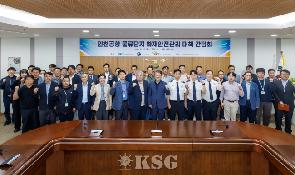
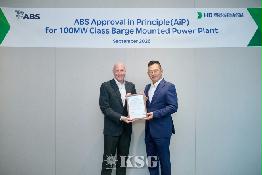
- 하만식 신임 해양경찰청장 "신뢰받는 해양치안 구현할 터"유영종 오리엔트스타로직스 회장, 무역업 발전 공로 인정받아중앙아시아 물류루트 코로나 이후 3배 성장인사/ 해양수산부HD현대, 미국선급서 부유식 발전설비 기본인증 획득“AI·이커머스가 새 동력” 아태 항공화물 성장 이끈다中 시안-유럽 정기화물열차 운행실적 4000회 돌파HMM, 여의도 한강공원서 환경정화 캠페인 진행판례/ “허무한 합의”인천공항공사, 공항 물류단지 화재안전관리 강화


스케줄 많이 검색한 항구

해사물류 통계 





COPYRIGHTⓒ 2014 KOREA SHIPPING GAZETTE. ALL RIGHTS RESERVED.

COPYRIGHTⓒ 2015
KOREA SHIPPING GAZETTE. ALL RIGHTS RESERVED.
0/250
확인