






-
뉴스
-
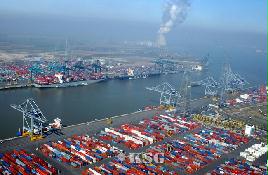
- Stena Line’s Port of Gothenburg Terminal Relocati...
- The Port of Gothenburg has awarded NCC the contract for the design and implementation of Stena Line’s new terminal in the Port of Gothenburg. The agreement was signed on Tuesday and means that the next step can be taken in the work to realise the long-planned relocat...
-
- CEVA Logistics Advances Next Phase of Growth with N...
- CEVA Logistics, a world leader in third-party logistics, today announced the next phase of its global growth strategy under Chief Executive Officer Patrick Moebel. Following a period of listening and engagement with employees, customers and business partners, CEVA is a...
-
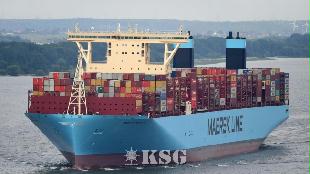
- Maersk and PUMA Expand Partnership to Unlock Greate...
- A.P. Moller - Maersk (Maersk) today announced it has begun managing PUMA’s North America distribution network, which includes three large, highly automated warehouses in California, Arizona, and Indiana totaling about 2.3 million square feet. PUMA, one of the world...
-
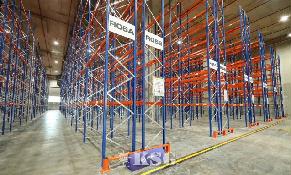
- DP World Expands Contract Logistics Network In Thai...
- DP World today announced the opening of a new contract logistics distribution centre in Bang Na, expanding its logistics capacity in Thailand and strengthening its ability to support customers across key manufacturing and consumer sectors. The approximately 10,000-squa...
-
- 운항스케줄
-
오피니언




























2002-09-11 11:01
Dex believes that service really counts


Dex, the UK-based hull & machinery insurer, has substantially increased the number of ships on its books since Spring. There are now around 400, spread across 28 fleets and a wide range of vessels, including bulk carriers, reefers, tankers, containerships, chemical tankers and LPG carriers. Recent entries have included ships from Greece, Germany, Canada and the USA.
This compares with just 130 entered ships from 16 owners at the beginning of the year. Since then, not only has business leapt ahead but so has the number of serious enquiries from all over the world.
This surge has been very much according to plan, said Dex Chief Operating Officer Mark Carter at a briefing on September 10th.
“Dex has been positioned to take advantage of major changes in the hull & machinery market. We were formed at the end of 1999 to establish our credentials while the market was still very soft. Consequently, we have been very cautious about business accepted, declining anything likely to be unprofitable at prevailing rates.
“We expected an upswing in rates last year. This was already under way when boosted by the events of September 11th. The great majority of owners and brokers appreciate that insurance costs have had to rise, having arguably been too low for years.”
In fact, insurance costs have risen markedly as a proportion of marine operating costs. Today, hull, machinery and protection & indemnity cover for a typical Panamax vessel can amount to 15 per cent of total operating costs. The situation is being made more difficult for some by contractual exclusions and exacting terms. These costs may well rise absolutely and proportionally in a hardening market.
“Further, our contacts with customers have revealed a mounting irritation with the substantial cyclical swings which have characterised the hull & machinery market,” continued Mr. Carter. “Owners are fed up with the resultant price fluctuations. It follows that they are very interested indeed in products and services which set out to balance and stabilise the market.
“There’s more to cover than price but the more people have to pay, the more they become interested in the extent of cover, terms to suit their fleets and back-up service.”
According to Mr Carter, this is very much where Dex comes in as “there is more to the Dex business philosophy than simply taking advantage of a cyclical rise.”
Dex has the backing of Swiss Re and Thomas Miller, the latter providing an extensive network of offices in Asia Pacific and North America and worldwide claims handling resources.
A sophisticated rating model improves the objectivity of the quotation process and provides pointers to the services required by shipowners. The Dex Advisory Council of shipowners and other transportation experts reviews products, services and industry developments, exercises discretionary power over appropriate claims and advises on the general direction of the operation.
Policies are written on an all risks basis, 100 per cent collision liability, no trading warranties, no deductible applied to general average and salvage, and guarantee facilities for collision and salvage which aim to issue security within 24 hours.
Exclusions are clearly explained and there are options to cover shipowners’ interest; loss of income; and war, strikes and malicious damage. These have been widely taken up. The terms and conditions are embodied in the streamlined Codex contractual wording.
Casualties have included a ship without power in the south Atlantic, another grounded on the Great Barrier Reef and two major collisions. In all cases, customised claims procedures were utilised by shipowners or their brokers. Time was saved by all parties knowing whom to instruct.
“If there is one overriding goal,” added Mr. Carter, “it is to get the ship trading?and earning?as soon as possible.”
Since the outset, Dex’ business has been closely linked with Lloyd’s Syndicate 2241. When Chartwell Managing Agency decided at the beginning of this year to reallocate its capacity to other insurance areas, it sold its interests in both Dex Serv (the Dex marketing and servicing company) and the Syndicate to fellow investors Thomas Miller and Swiss Re.
This led to the launch of Thomas Miller Managing Agency in June. Dex Serv continues to provide marketing and servicing support. Swiss Re has been the sole capital provider to the Syndicate since January 1st when it increased its stamp capacity from US$20 million to US$33 million. TMMA, with its capacity to write 100 per cent lines up to US$100 million, continues to look for a higher share of quality lines than is traditional with marine syndicates.
Mark Carter is also Managing Director of TMMA while senior colleagues work in both operations: Peter Wright and Martin Bonds on underwriting and risk management and Ann Waite on claims. New executives have been brought in recently for claims and underwriting and to man the ‘box’ at Lloyd’s.
The ‘box’ operation has proved very useful in referring appropriate enquiries to Dex Serv. Around 90 per cent of business derived from the box in the first year and 60 per cent in the second but this will be much lower in 2002 as an increasing number of quality owners talk direct to Dex Serv.
Mr Carter concluded: “We are very encouraged by the more participative approach of owners to hull & machinery insurance. The more we discuss their needs with clients, the more we can tailor cover to suit particular fleets. The wind is set fair for the Dex approach to hull & machinery insurance.”
This compares with just 130 entered ships from 16 owners at the beginning of the year. Since then, not only has business leapt ahead but so has the number of serious enquiries from all over the world.
This surge has been very much according to plan, said Dex Chief Operating Officer Mark Carter at a briefing on September 10th.
“Dex has been positioned to take advantage of major changes in the hull & machinery market. We were formed at the end of 1999 to establish our credentials while the market was still very soft. Consequently, we have been very cautious about business accepted, declining anything likely to be unprofitable at prevailing rates.
“We expected an upswing in rates last year. This was already under way when boosted by the events of September 11th. The great majority of owners and brokers appreciate that insurance costs have had to rise, having arguably been too low for years.”
In fact, insurance costs have risen markedly as a proportion of marine operating costs. Today, hull, machinery and protection & indemnity cover for a typical Panamax vessel can amount to 15 per cent of total operating costs. The situation is being made more difficult for some by contractual exclusions and exacting terms. These costs may well rise absolutely and proportionally in a hardening market.
“Further, our contacts with customers have revealed a mounting irritation with the substantial cyclical swings which have characterised the hull & machinery market,” continued Mr. Carter. “Owners are fed up with the resultant price fluctuations. It follows that they are very interested indeed in products and services which set out to balance and stabilise the market.
“There’s more to cover than price but the more people have to pay, the more they become interested in the extent of cover, terms to suit their fleets and back-up service.”
According to Mr Carter, this is very much where Dex comes in as “there is more to the Dex business philosophy than simply taking advantage of a cyclical rise.”
Dex has the backing of Swiss Re and Thomas Miller, the latter providing an extensive network of offices in Asia Pacific and North America and worldwide claims handling resources.
A sophisticated rating model improves the objectivity of the quotation process and provides pointers to the services required by shipowners. The Dex Advisory Council of shipowners and other transportation experts reviews products, services and industry developments, exercises discretionary power over appropriate claims and advises on the general direction of the operation.
Policies are written on an all risks basis, 100 per cent collision liability, no trading warranties, no deductible applied to general average and salvage, and guarantee facilities for collision and salvage which aim to issue security within 24 hours.
Exclusions are clearly explained and there are options to cover shipowners’ interest; loss of income; and war, strikes and malicious damage. These have been widely taken up. The terms and conditions are embodied in the streamlined Codex contractual wording.
Casualties have included a ship without power in the south Atlantic, another grounded on the Great Barrier Reef and two major collisions. In all cases, customised claims procedures were utilised by shipowners or their brokers. Time was saved by all parties knowing whom to instruct.
“If there is one overriding goal,” added Mr. Carter, “it is to get the ship trading?and earning?as soon as possible.”
Since the outset, Dex’ business has been closely linked with Lloyd’s Syndicate 2241. When Chartwell Managing Agency decided at the beginning of this year to reallocate its capacity to other insurance areas, it sold its interests in both Dex Serv (the Dex marketing and servicing company) and the Syndicate to fellow investors Thomas Miller and Swiss Re.
This led to the launch of Thomas Miller Managing Agency in June. Dex Serv continues to provide marketing and servicing support. Swiss Re has been the sole capital provider to the Syndicate since January 1st when it increased its stamp capacity from US$20 million to US$33 million. TMMA, with its capacity to write 100 per cent lines up to US$100 million, continues to look for a higher share of quality lines than is traditional with marine syndicates.
Mark Carter is also Managing Director of TMMA while senior colleagues work in both operations: Peter Wright and Martin Bonds on underwriting and risk management and Ann Waite on claims. New executives have been brought in recently for claims and underwriting and to man the ‘box’ at Lloyd’s.
The ‘box’ operation has proved very useful in referring appropriate enquiries to Dex Serv. Around 90 per cent of business derived from the box in the first year and 60 per cent in the second but this will be much lower in 2002 as an increasing number of quality owners talk direct to Dex Serv.
Mr Carter concluded: “We are very encouraged by the more participative approach of owners to hull & machinery insurance. The more we discuss their needs with clients, the more we can tailor cover to suit particular fleets. The wind is set fair for the Dex approach to hull & machinery insurance.”


선박운항스케줄
인기 스케줄
-
PYEONGTAEK
 BANGKOK
선박운항스케줄 목록 - 선박운항스케줄목록으로 Vessel, D-Date, A-Date, Agent를 나타내는 테이블입니다. Vessel D-Date A-Date Agent Dongjin Confident 11/02 11/14 Dongjin Sawasdee Mimosa 11/04 11/11 Sinokor -
INCHEON
QINGDAO선박운항스케줄 목록 - 선박운항스케줄목록으로 Vessel, D-Date, A-Date, Agent를 나타내는 테이블입니다. Vessel D-Date A-Date Agent Honor Prosper 10/27 10/28 EAS SHIPPING KOREA Honor Prosper 10/27 10/28 BEN LINE Honor Prosper 10/27 10/28 Taiyoung -
MASAN
VANCOUVER B.C.선박운항스케줄 목록 - 선박운항스케줄목록으로 Vessel, D-Date, A-Date, Agent를 나타내는 테이블입니다. Vessel D-Date A-Date Agent Asian Naga 11/25 12/26 ECL Korea -
BUSAN
VANCOUVER B.C.선박운항스케줄 목록 - 선박운항스케줄목록으로 Vessel, D-Date, A-Date, Agent를 나타내는 테이블입니다. Vessel D-Date A-Date Agent One Modern 10/27 11/07 HMM Hmm Vancouver 10/29 11/09 HMM Hyundai Supreme 11/09 11/23 HMM -
BUSAN
TORONTO선박운항스케줄 목록 - 선박운항스케줄목록으로 Vessel, D-Date, A-Date, Agent를 나타내는 테이블입니다. Vessel D-Date A-Date Agent Westwood Victoria 11/13 12/11 Hyopwoon Nadi Chief 11/20 12/18 Hyopwoon Westwood Rainier 11/28 12/25 Hyopwoon
- 출발항
-
- 도착항
-


많이 본 기사
- 전세계 교역량 AI 투자가 성장 견인…상반기 6% 증가삼성SDS, 우정항공 지분 100% 인수 계약 체결中 코스코, 아시아-남미동안 신항로 12월 개설한국선급, 선박내부 3차원으로 재현한 공간정보플랫폼 첫 공개IPA, 인천항 '컨' 물동량 창출 포워더에 1.3억 인센티브 지원HMM, 태국 RCL등과 중국-인니·싱가포르 노선 신설롯데글로벌로지스, 육군본부와 전시 수송·방산물류 협력맥스피드 “해상 이어 항공콘솔도 핵심사업으로”글로벌 컨선사들, 상반기 외형 커졌지만 수익성 일제히 후퇴기고/ AI 기반 SCM의 현황 및 발전 방향
- 광양경자청, 대구 미래모빌리티 행사서 광양만권 투자환경 홍보한국형 해운지수 맞히면 상금·커피쿠폰 쏜다HD현대, 미국에 조선소 짓는다…2029년 가동 목표광양경자청, 美 하와이 대표단과 해양·물류산업 협력방안 모색“부산항 탐험대” 부산항만공사·HMM오션서비스등 체험교육 맞손해운협회, 상근부회장에 김준석 전 해수부 실장 내정홍콩 OOCL, 3분기 매출액 4.4조 달성…전년比 두자릿수 증가BDI 2593포인트…중대형선 시장서 소강상태해양교통안전공단, 선박해양플랜트연구소와 친환경선박 개발 맞손한진 조현민 사장, 치안산업진흥협회장 첫 공식 행보


스케줄 많이 검색한 항구

해사물류 통계 





COPYRIGHTⓒ 2014 KOREA SHIPPING GAZETTE. ALL RIGHTS RESERVED.

COPYRIGHTⓒ 2015
KOREA SHIPPING GAZETTE. ALL RIGHTS RESERVED.
0/250
확인