





-
뉴스
-
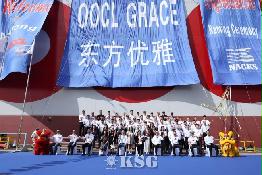
- OOCL Names OOCL Grace, Its Second 24,000TEU Methano...
- ??Orient Overseas Container Line Ltd. (OOCL) today held the naming ceremony for OOCL Grace, the company's second methanol dual-fuel container vessel. The naming ceremony was held at the shipyard of Nantong COSCO KHI Ship Engineering Co., Ltd. (“NACKS"). Ms. Annet...
-
- Höegh Autoliners Orders Six Additional Aurora Clas...
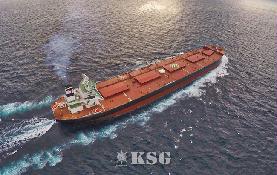
- Höegh Autoliners ASA is pleased to announce that it has decided to order six additional new dual-fuel LNG and zero-carbon-ready Aurora class vessels for delivery in 2029–2031. This decision will extend Höegh Autoliners’ Aurora class newbuilding progra...
-
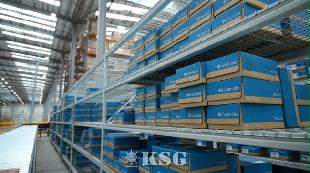
- Maersk Expands Partnership With Columbia Sportswear...
- A.P. Moller - Maersk (Maersk) has signed a new agreement with Columbia Sportswear Company (Columbia), a global leader in outdoor, active and lifestyle products, to provide warehousing and distribution services for its Pick & Pack operations in the United Kingdom and Ir...
-
- Munich Airport and Lufthansa Expand Stopover Offer ...
- The Lufthansa Stopover Program—a collaboration between Munich Airport and Lufthansa—is being expanded: effective immediately, the offer is also available to Lufthansa passengers traveling from China, India, Japan, South Korea, and Thailand. Travelers from t...
-
- 운항스케줄
-
오피니언























2001-05-25 17:42
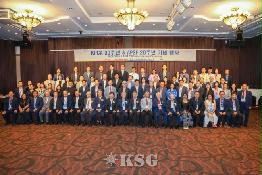
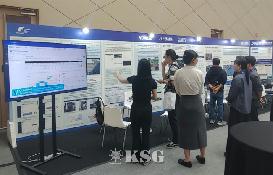
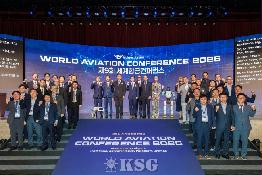
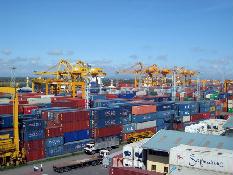
[ International coference on world shipping held in Seoul ]


The seminar on the international trade relations and world shipping, j
oint conference of Korea Maritime Institute and International Associat
ion of Maritime Economists, held at Seoul on June 9-10th.
The international conference, which drew about 200 people from 13 coun
tries including Korea, was cooganized by Korea Matitime Institute and
the International Association of Maritime Economists(IAME).
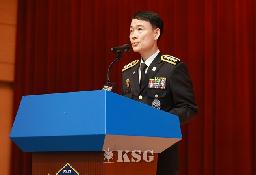
Kim Chol-yong, administrator of the Korea Maritime and Port Administra
tion, delivered a welcoming speech at the opening session.
At first, H.E. Haralambides, a professor at Erasmus University of the
Netherlands, made the remarks on the opening day of a two-day conferen
ce on international trade relations and world shipping.
“A strict application of the principles of the General Agreement on T
ariffs and Trade (GATT) would have negative effects on less developed
countries(LCDs) in the shipping and port industry, Traditional maritim
e nations, however, would benifit from the liberization of sector” he
said.
Haralambides tried to estimate the effects that the most important GAT
T principles such as most-favored-nation(MFN), national treatment(NT),
market access and sudsidies and antidumping would have on shipping an
d ports.
“The issue immediately arising with respect to the MFN principleis th
at of cargo sharing. Unconditional application of the MFN clause in ma
ritime transport could mean that all countries who exercise cargo shar
ing should immediately or gradually phase out all or some of their pra
ctices, or otherwise extend cargo reservation and/or sharing priviledg
es to other parties,” he said.
The professor predicted that if all kinds of cargo reservation are pha
sed out immediately, it will be difficult, if not impossible, for LDCs
to participate in maritime transport, which is contrary to the princi
ple of increasing the participation of developing countries.
Under a strict implementation of NT, any restrictive measures in favor
of domestic shipping should either be removed or extended th foreign
shipping companies.
For LDCs, the professor said, this would mean a futher reduction of th
e demand for their national fleets, if they are not competitive enough
.
According to Hralambides, this also means the removal of any discrimin
atory charges and taxes levied against foreign flag ships mainly by th
e LDCs.
“Thus, although the effects could be negative for many LDCs, traditio
nal maritime nations would benefit as they are the victims of discrimi
natory charges and taxes,” he said.
Market access implies the establishment of a commercial presence in fo
reign countries and the right to provide services.
If the provisions of NT and market access are strictly implemented and
at the same time all protectionist measures are abolished completely,
LDC shipping may suffer significantly, he said.
“This is not in conformity with the other articles of the General Agr
eement on Trade in Services (GATS) framework, notably with the princip
le of increasing participation of developing countries.”
A standstill commitment which would prevent the introduction of new re
strictive mesaures, within a given period of time, may be an acceptabl
e compromise, Hralambides said, adding that during that time LDC shipp
ing companies will have to strengthen themselves and adjust in order t
o compete with others under free and fair terms.
oint conference of Korea Maritime Institute and International Associat
ion of Maritime Economists, held at Seoul on June 9-10th.
The international conference, which drew about 200 people from 13 coun
tries including Korea, was cooganized by Korea Matitime Institute and
the International Association of Maritime Economists(IAME).
Kim Chol-yong, administrator of the Korea Maritime and Port Administra
tion, delivered a welcoming speech at the opening session.
At first, H.E. Haralambides, a professor at Erasmus University of the
Netherlands, made the remarks on the opening day of a two-day conferen
ce on international trade relations and world shipping.
“A strict application of the principles of the General Agreement on T
ariffs and Trade (GATT) would have negative effects on less developed
countries(LCDs) in the shipping and port industry, Traditional maritim
e nations, however, would benifit from the liberization of sector” he
said.
Haralambides tried to estimate the effects that the most important GAT
T principles such as most-favored-nation(MFN), national treatment(NT),
market access and sudsidies and antidumping would have on shipping an
d ports.
“The issue immediately arising with respect to the MFN principleis th
at of cargo sharing. Unconditional application of the MFN clause in ma
ritime transport could mean that all countries who exercise cargo shar
ing should immediately or gradually phase out all or some of their pra
ctices, or otherwise extend cargo reservation and/or sharing priviledg
es to other parties,” he said.
The professor predicted that if all kinds of cargo reservation are pha
sed out immediately, it will be difficult, if not impossible, for LDCs
to participate in maritime transport, which is contrary to the princi
ple of increasing the participation of developing countries.
Under a strict implementation of NT, any restrictive measures in favor
of domestic shipping should either be removed or extended th foreign
shipping companies.
For LDCs, the professor said, this would mean a futher reduction of th
e demand for their national fleets, if they are not competitive enough
.
According to Hralambides, this also means the removal of any discrimin
atory charges and taxes levied against foreign flag ships mainly by th
e LDCs.
“Thus, although the effects could be negative for many LDCs, traditio
nal maritime nations would benefit as they are the victims of discrimi
natory charges and taxes,” he said.
Market access implies the establishment of a commercial presence in fo
reign countries and the right to provide services.
If the provisions of NT and market access are strictly implemented and
at the same time all protectionist measures are abolished completely,
LDC shipping may suffer significantly, he said.
“This is not in conformity with the other articles of the General Agr
eement on Trade in Services (GATS) framework, notably with the princip
le of increasing participation of developing countries.”
A standstill commitment which would prevent the introduction of new re
strictive mesaures, within a given period of time, may be an acceptabl
e compromise, Hralambides said, adding that during that time LDC shipp
ing companies will have to strengthen themselves and adjust in order t
o compete with others under free and fair terms.


선박운항스케줄
인기 스케줄
-
BUSAN
 KHOR FAKKAN
선박운항스케줄 목록 - 선박운항스케줄목록으로 Vessel, D-Date, A-Date, Agent를 나타내는 테이블입니다. Vessel D-Date A-Date Agent Kmtc Dammam 09/24 10/20 FARMKO GLS Esl Khor Fakkan 09/26 10/18 ESL Esl Khor Fakkan 09/26 10/19 FARMKO GLS -
BUSAN
SOHAR선박운항스케줄 목록 - 선박운항스케줄목록으로 Vessel, D-Date, A-Date, Agent를 나타내는 테이블입니다. Vessel D-Date A-Date Agent Kmtc Dammam 09/24 11/18 BEN LINE Esl Khor Fakkan 09/26 10/23 ESL Esl Khor Fakkan 09/26 10/24 KOREA SHIPPING -
BUSAN
JEBEL ALI선박운항스케줄 목록 - 선박운항스케줄목록으로 Vessel, D-Date, A-Date, Agent를 나타내는 테이블입니다. Vessel D-Date A-Date Agent Kmtc Dammam 09/24 10/29 BEN LINE Esl Khor Fakkan 09/26 10/18 KWANHAE SHIPPING Esl Khor Fakkan 09/26 10/20 ESL -
BUSAN
NINGBO-ZHOUSHAN선박운항스케줄 목록 - 선박운항스케줄목록으로 Vessel, D-Date, A-Date, Agent를 나타내는 테이블입니다. Vessel D-Date A-Date Agent Kmtc Shanghai 09/22 09/27 KMTC Erasmus Icon 09/23 09/25 MAERSK LINE Easline Kwangyang 09/23 09/25 EAS SHIPPING KOREA -
BUSAN
RABAUL선박운항스케줄 목록 - 선박운항스케줄목록으로 Vessel, D-Date, A-Date, Agent를 나타내는 테이블입니다. Vessel D-Date A-Date Agent Meratus Bintan 09/26 10/29 FARMKO GLS Meratus Bintan 09/27 10/29 FARMKO GLS Kyowa Rose 10/25 11/07 Kyowa Korea Maritime
- 출발항
-
- 도착항
-





많이 본 기사
- ‘허브·스포크 전략 도입’ HMM, 2년만에 방콕막스 컨선 도입亞 항만 10척 중 6척 지각…운임지수 4년來 최고치상반기 세계 ‘컨’ 5% 성장…中 닝보, 싱가포르 추월로지스올, 日 물류박람회 참가…현지 사업 확대 모색中-라오스 정기화물열차 운송량 9000만t 돌파대한항공·아시아나 마일리지 통합안 확정中 코스코, 운임 하락에도 상반기 영업익 2.9조 달성<스텔라데이지>호 침몰 폴라리스쉬핑 김완중 회장 금고 2년 ‘감형...한국선급, HD현대·라이베리아기국등과 돛단 LNG선 공동개발UPS, 아시아·태평양 신임 사장에 버나드 장 선임
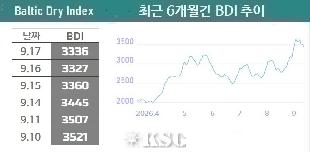
- 기고/ 해양 데이터 주권 상실, 국가 해양그랜드 전략이 해법BDI 3336포인트…케이프선 시장서 반등 기세 보여한화오션, 미국선급서 부유식 데이터센터 개념설계 인증 획득대한항공, 보잉 항공기 103대 도입 확정동남아 4년만에 1000弗 돌파…컨운임지수 3600선 회복한국파렛트풀, 아시아 물류 표준화 공로로 협회 감사패KSS해운, 추석 맞아 협력사 73곳에 대금 조기지급한진 노삼석·조현민 사장, 추석 특수기 앞두고 현장 점검여수광양항만공사, 中 닝보저우산항과 항만 협력 논의인천항만공사, 권종오 신임 항만위원 선임


스케줄 많이 검색한 항구

해사물류 통계 





COPYRIGHTⓒ 2014 KOREA SHIPPING GAZETTE. ALL RIGHTS RESERVED.

COPYRIGHTⓒ 2015
KOREA SHIPPING GAZETTE. ALL RIGHTS RESERVED.
0/250
확인