





-
뉴스
-

- A Decade of Trust, A New Course Ahead
- In 2026, STAR OCEAN LINE (SOL) proudly celebrates its 10th anniversary. Over the past decade, SOL has grown steadily, building its foundation on the trust and support of its customers and business partners while establishing a reliable presence in the global shipping a...
-
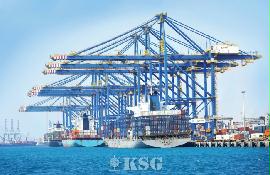
- DP World Revenue Rises 13.1% to $12.7Billion
- DP World reported revenue of $12.7 billion for the first half of 2026, up 13.1% year-on-year, as the strength of its global network helped the company navigate significant disruption to trade flows in the Middle East. Growth across Logistics, Marine Services and DP Wor...
-
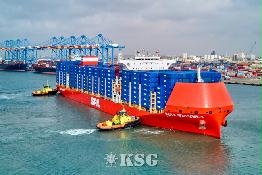
- PIL Partners with Celonis and WNS to Expand Process...
- Pacific International Lines (PIL), one of the world’s largest shipping container companies, has partnered Celonis, the global leader in Process Intelligence, and WNS, part of Capgemini, to expand its global Process Intelligence Centre of Excellence (CoE), acceleratin...
-
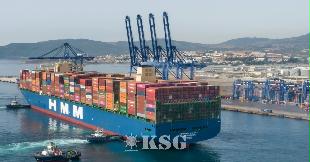
- HMM Launches New East Africa Service, Expanding Net...
- HMM has announced the launch of the Gulf - India - East Africa (GIA) Service, a new container route connecting India and East Africa, scheduled to commence in September.The GIA service is HMM's second African feeder network, operating under its Hub & Spoke strategy...
-
- 운항스케줄
-
오피니언





















2001-06-01 15:21
Container Terminal Authority needs to be rebuilt


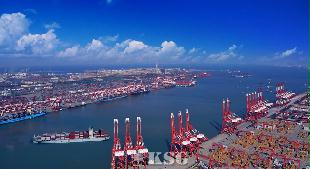
The Korea Container Terminal Authority needs to rebuild their position to help Korea become a primary Northeast Asian Logistic Center and strong ocean country in the 21st century, said professor Ki-myoung Ahn from Korea Maritime University.
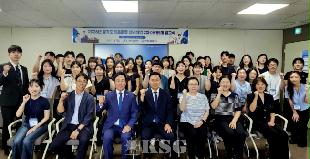
Professor Ahn predicted in the policy discussion held by the Korea Port Economy Society that the role of "public corporations" would gradually increase, even if port management systems changed in the future. He anticipated that the Container Terminal Authority would be in charge of developing the hinterland, North Korean port developments preparing for inter-Korean business, hub port developments, and ocean developments.
This type of business requires long construction periods and offers obscure profitability. It will be difficult for private corporations to attend to it directly because of its basic nature. So the Korea Container Terminal Authority, a kind of state-run company will be suitable to undertake this work. He also suggested that to prepare for all of this, the Korea Container Terminal Authority would need to restructure their organization.
Meanwhile, the Korea Container Terminal Authority is showing favorable numbers in their analysis of profitability, maintaining a 150-160% level. In this analysis, the Korea Container Terminal Authority showed total investment efficiency at a low state, but value added ratio and capital-intensivity at a high level.
After the Korea Container Terminal Authority was established, it built 13 berths in the Kamman quay, the first quay in the Port of Kwangyang, Uam quay, HBCT (Hyundai Busan Container Terminal), and PECT (Pusan East Container Terminal) as a dedicated container terminal over 9 years. However, government efforts to industrialize Korea in the post occupation years up to the early 1990`s resulted in nearly 7 berths at container only terminals in HBCT and PECT.
Container cargoes will multiply 1.7 fold by 2006 over 1999 and 2.6 fold by 2011. According to this, 104 berths are needed to handle cargoes in 2011. The Korea Container Terminal Authority will assume the bulk of the workload, and is currently planning to develop 66 berths according to these figures.
Professor Ahn stressed that the Korea Container Terminal Authority will draw on a fund to support financial resources for port facilities and will be capable of reinvesting income from berthing and quay rentals for the port in the future.
Regarding government policies aimed at smaller government, business diversity, localization and deregulation, the Ministry of Maritime Affairs and Fisheries should put its main focus on the port policy and deliver regional offices or private port handling operations. But professor Ahn also said that it is too early to hand port operations over to regional offices. It might need public cooperation to run a part of port management and development.
Kwangyang, hoping to be a hub port in the Pacific, needs to gear up container ports continuously, and so does the Korea Container Terminal Authority, he added.
In conjunction with North Korean port developments, he expected that North Korea would speed up its open economy after the Inter Korean summit, and it would urgently need port facilities for sea transportation to move a lot of cargo. Now North Korea is reported to have no basis for manpower, financial resources, or know-how for port development.
He suggested that with the character of this work in mind, there is no other more suitable body than the Korea Container Terminal Authority.
Professor Ahn predicted in the policy discussion held by the Korea Port Economy Society that the role of "public corporations" would gradually increase, even if port management systems changed in the future. He anticipated that the Container Terminal Authority would be in charge of developing the hinterland, North Korean port developments preparing for inter-Korean business, hub port developments, and ocean developments.
This type of business requires long construction periods and offers obscure profitability. It will be difficult for private corporations to attend to it directly because of its basic nature. So the Korea Container Terminal Authority, a kind of state-run company will be suitable to undertake this work. He also suggested that to prepare for all of this, the Korea Container Terminal Authority would need to restructure their organization.
Meanwhile, the Korea Container Terminal Authority is showing favorable numbers in their analysis of profitability, maintaining a 150-160% level. In this analysis, the Korea Container Terminal Authority showed total investment efficiency at a low state, but value added ratio and capital-intensivity at a high level.
After the Korea Container Terminal Authority was established, it built 13 berths in the Kamman quay, the first quay in the Port of Kwangyang, Uam quay, HBCT (Hyundai Busan Container Terminal), and PECT (Pusan East Container Terminal) as a dedicated container terminal over 9 years. However, government efforts to industrialize Korea in the post occupation years up to the early 1990`s resulted in nearly 7 berths at container only terminals in HBCT and PECT.
Container cargoes will multiply 1.7 fold by 2006 over 1999 and 2.6 fold by 2011. According to this, 104 berths are needed to handle cargoes in 2011. The Korea Container Terminal Authority will assume the bulk of the workload, and is currently planning to develop 66 berths according to these figures.
Professor Ahn stressed that the Korea Container Terminal Authority will draw on a fund to support financial resources for port facilities and will be capable of reinvesting income from berthing and quay rentals for the port in the future.
Regarding government policies aimed at smaller government, business diversity, localization and deregulation, the Ministry of Maritime Affairs and Fisheries should put its main focus on the port policy and deliver regional offices or private port handling operations. But professor Ahn also said that it is too early to hand port operations over to regional offices. It might need public cooperation to run a part of port management and development.
Kwangyang, hoping to be a hub port in the Pacific, needs to gear up container ports continuously, and so does the Korea Container Terminal Authority, he added.
In conjunction with North Korean port developments, he expected that North Korea would speed up its open economy after the Inter Korean summit, and it would urgently need port facilities for sea transportation to move a lot of cargo. Now North Korea is reported to have no basis for manpower, financial resources, or know-how for port development.
He suggested that with the character of this work in mind, there is no other more suitable body than the Korea Container Terminal Authority.


선박운항스케줄
인기 스케줄
-
BUSAN
 LAEM CHABANG
선박운항스케줄 목록 - 선박운항스케줄목록으로 Vessel, D-Date, A-Date, Agent를 나타내는 테이블입니다. Vessel D-Date A-Date Agent Kmtc Pusan 08/30 09/08 Pan Con Sawasdee Sunrise 08/31 09/08 Sinokor Sawasdee Capella 08/31 09/08 KMTC -
INCHEON
HONG KONG선박운항스케줄 목록 - 선박운항스케줄목록으로 Vessel, D-Date, A-Date, Agent를 나타내는 테이블입니다. Vessel D-Date A-Date Agent Kmtc Singapore 08/30 09/06 KMTC Starship Draco 08/31 09/16 KMTC Starship Draco 08/31 09/16 KMTC -
BUSAN
GUAM선박운항스케줄 목록 - 선박운항스케줄목록으로 Vessel, D-Date, A-Date, Agent를 나타내는 테이블입니다. Vessel D-Date A-Date Agent Kyowa Falcon 09/03 09/14 Kyowa Korea Maritime Apl Islander 09/06 09/14 Kukbo Express Apl Islander 09/10 09/15 Hyopwoon -
BUSAN
YAP선박운항스케줄 목록 - 선박운항스케줄목록으로 Vessel, D-Date, A-Date, Agent를 나타내는 테이블입니다. Vessel D-Date A-Date Agent Kyowa Falcon 09/03 09/20 Kyowa Korea Maritime Kyowa Stork 09/25 10/13 Kyowa Korea Maritime -
MASAN
VANCOUVER B.C.선박운항스케줄 목록 - 선박운항스케줄목록으로 Vessel, D-Date, A-Date, Agent를 나타내는 테이블입니다. Vessel D-Date A-Date Agent Cosmic Ace 09/18 10/19 ECL Korea
- 출발항
-
- 도착항
-


많이 본 기사
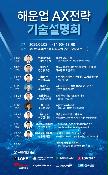
- HMM, 원양항로 비중 낮추고 근해사업 강화한다고려대 바다최고위 8기 수료식 성료스타오션라인 창립 10돌 “고객중심 통합물류서비스 실현 박차”벌크선 시장, 全 선형 회복세에 FFA 시장도 강세이스라엘 짐라인, 상반기 영업익 2000억…전년比 79%↓UPA, 위험물 환적부두 확대 추진…물류비 절감 기대BPA, 신항 2-6단계 국산 트랜스퍼크레인 운송 착수해운협회, 국적선사 AI 전환 돕는다…기술설명회 개최KIFFA, 경기도 해운물류 청년취업 아카데미 개강현대글로비스, 항공운송으로 국내 뷰티기업 수출 지원한다
- 케이조선, 유럽·중동서 5100억 규모 화학제품운반선 6척 수주광양경자청·순천大, 광양만권 입주기업 취업 지원 ‘맞손’팬스타그룹 크루즈 브랜드 ‘K 디자인 어워드’ 본상 수상해양환경공단, 습지의 가치와 중요성 알리기 총력신간/ 김명재 목포해양대 교수 <바다를 품은 길> 발간YGPA, 광양항 우드펠릿 수입·유통 거점 육성아태항만 수요 성장 계속된다…15년간 250조 투자 필요인천항만공사, 포워더 초청해 물동량 유치 나서미래성장·AI·친환경 대응 강화…YGPA, 9월 조직개편 단행로지스올, 소아암 환아 8명 치료비 지원


스케줄 많이 검색한 항구

해사물류 통계 





COPYRIGHTⓒ 2014 KOREA SHIPPING GAZETTE. ALL RIGHTS RESERVED.

COPYRIGHTⓒ 2015
KOREA SHIPPING GAZETTE. ALL RIGHTS RESERVED.
0/250
확인