





-
뉴스
-
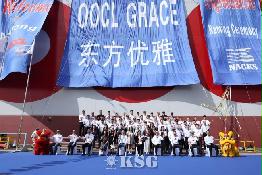
- OOCL Names OOCL Grace, Its Second 24,000TEU Methano...
- ??Orient Overseas Container Line Ltd. (OOCL) today held the naming ceremony for OOCL Grace, the company's second methanol dual-fuel container vessel. The naming ceremony was held at the shipyard of Nantong COSCO KHI Ship Engineering Co., Ltd. (“NACKS"). Ms. Annet...
-
- Höegh Autoliners Orders Six Additional Aurora Clas...
- Höegh Autoliners ASA is pleased to announce that it has decided to order six additional new dual-fuel LNG and zero-carbon-ready Aurora class vessels for delivery in 2029–2031. This decision will extend Höegh Autoliners’ Aurora class newbuilding progra...
-
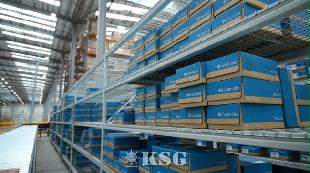
- Maersk Expands Partnership With Columbia Sportswear...
- A.P. Moller - Maersk (Maersk) has signed a new agreement with Columbia Sportswear Company (Columbia), a global leader in outdoor, active and lifestyle products, to provide warehousing and distribution services for its Pick & Pack operations in the United Kingdom and Ir...
-
- Munich Airport and Lufthansa Expand Stopover Offer ...
- The Lufthansa Stopover Program—a collaboration between Munich Airport and Lufthansa—is being expanded: effective immediately, the offer is also available to Lufthansa passengers traveling from China, India, Japan, South Korea, and Thailand. Travelers from t...
-
- 운항스케줄
-
오피니언







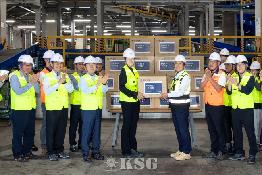








2002-01-11 10:46
Securing heavy goods on board correctly


Rickmers, the German project liner and heavy lift specialist, has organised its fourth lashings seminar of the year in Hamburg, entitled ‘Safe Transportation of Project Cargo’. Following the success of the January, May and October seminars, 50 forwarders attended the latest Hamburg event. The seminar’s primary goal was to emphasise correct lashing practice in order to prevent damage or loss to either the ship or the cargo. These regular seminars aim to increase forwarders’ and carriers’ knowledge of the processes involved in the loading of heavy cargo and to improve cooperation between forwarder, their clients and Rickmers.
As a result of globalisation of production, more than 90% of project cargo is carried by sea for at least part of the overall transport move. Production and transportation of goods should be on a par in terms of standards of quality and technology. Often however, there is a serious discrepancy, namely between high-value production techniques and unsatisfactory transportation practices. Forwarders, carriers, lashings contractors and ship owners are asked to work together to create the necessary lashings standards to ensure the safe transportation of cargo.
Which standards are these? The first rule is quite simple: the cargo must fit the ship and the ship the cargo. The dimensions and weight of the cargo are vital to securing the individual pieces safely on board but these are not the sole considerations; many of the cargo’s non-standard characteristics, such as its centre of gravity, are important too.
Three points are crucial to the securing of the cargo: lifting, stowage and finally, securing. Ideally, lifting and securing devices should be integrated during the construction of a turbine, for example. In most cases the cargo is lifted several times between transport modes, eg barge, road, rail and/or ocean going vessels. The forwarder is responsible for the cargo, including its security, until its delivery to the consignee. The carrier cannot be responsible for this. The forwarder is therefore required to provide the shipowner and the carrier with all necessary information regarding the cargo. This system has potential for international improvement.
Decades of experience, as well as experience gained on a daily basis, are not enough to ensure a cargo’s security. This also rests with the engineer and on exact calculations based on individual circumstances. Whereas the securing of containers is standardised, the same cannot be said for the lashing of project cargo: each item presents different challenges that have to be met by various calculations. Rickmers’ security standards conform to IMO Resolution A714 and SOLAS 1974 (The International Convention for the Safety of Life at Sea).
A great number of variables may affect the cargo, such as its weight, the forces of inertia from the ship’s acceleration and the impact forces of wind and waves. Other influences are the size, the speed and stability of the ship, the area of the vessel in which the cargo is stowed, the shipping area, the season, as well as the duration of voyage. Immediate variables include, of course, the weather and sea conditions, as well as the captain’s experience and diligence.
Rickmers has produced a brochure on cargo security, which it hopes will improve communication between all parties dealing with heavy lifts and project cargo. Its title is ‘Company Standard on Stowage and Securing of Project Cargo’ and contains guidelines on the handling and securing of heavy cargo, international securing guidelines, checklists and sample calculations. The categorisation of project cargo shows the varying lashing options available.
Further topics covered in the seminar include new lifting and lashing technologies and legal questions such as liability and damage control.
The next Rickmers lashing seminars are planned for May and October/November of 2002 in Hamburg.
As a result of globalisation of production, more than 90% of project cargo is carried by sea for at least part of the overall transport move. Production and transportation of goods should be on a par in terms of standards of quality and technology. Often however, there is a serious discrepancy, namely between high-value production techniques and unsatisfactory transportation practices. Forwarders, carriers, lashings contractors and ship owners are asked to work together to create the necessary lashings standards to ensure the safe transportation of cargo.
Which standards are these? The first rule is quite simple: the cargo must fit the ship and the ship the cargo. The dimensions and weight of the cargo are vital to securing the individual pieces safely on board but these are not the sole considerations; many of the cargo’s non-standard characteristics, such as its centre of gravity, are important too.
Three points are crucial to the securing of the cargo: lifting, stowage and finally, securing. Ideally, lifting and securing devices should be integrated during the construction of a turbine, for example. In most cases the cargo is lifted several times between transport modes, eg barge, road, rail and/or ocean going vessels. The forwarder is responsible for the cargo, including its security, until its delivery to the consignee. The carrier cannot be responsible for this. The forwarder is therefore required to provide the shipowner and the carrier with all necessary information regarding the cargo. This system has potential for international improvement.
Decades of experience, as well as experience gained on a daily basis, are not enough to ensure a cargo’s security. This also rests with the engineer and on exact calculations based on individual circumstances. Whereas the securing of containers is standardised, the same cannot be said for the lashing of project cargo: each item presents different challenges that have to be met by various calculations. Rickmers’ security standards conform to IMO Resolution A714 and SOLAS 1974 (The International Convention for the Safety of Life at Sea).
A great number of variables may affect the cargo, such as its weight, the forces of inertia from the ship’s acceleration and the impact forces of wind and waves. Other influences are the size, the speed and stability of the ship, the area of the vessel in which the cargo is stowed, the shipping area, the season, as well as the duration of voyage. Immediate variables include, of course, the weather and sea conditions, as well as the captain’s experience and diligence.
Rickmers has produced a brochure on cargo security, which it hopes will improve communication between all parties dealing with heavy lifts and project cargo. Its title is ‘Company Standard on Stowage and Securing of Project Cargo’ and contains guidelines on the handling and securing of heavy cargo, international securing guidelines, checklists and sample calculations. The categorisation of project cargo shows the varying lashing options available.
Further topics covered in the seminar include new lifting and lashing technologies and legal questions such as liability and damage control.
The next Rickmers lashing seminars are planned for May and October/November of 2002 in Hamburg.


선박운항스케줄
인기 스케줄
-
BUSAN
 KHOR FAKKAN
선박운항스케줄 목록 - 선박운항스케줄목록으로 Vessel, D-Date, A-Date, Agent를 나타내는 테이블입니다. Vessel D-Date A-Date Agent Kmtc Dammam 09/24 10/20 FARMKO GLS Esl Khor Fakkan 09/26 10/18 ESL Esl Khor Fakkan 09/26 10/19 FARMKO GLS -
BUSAN
JEBEL ALI선박운항스케줄 목록 - 선박운항스케줄목록으로 Vessel, D-Date, A-Date, Agent를 나타내는 테이블입니다. Vessel D-Date A-Date Agent Kmtc Dammam 09/24 10/29 BEN LINE Esl Khor Fakkan 09/26 10/18 KWANHAE SHIPPING Esl Khor Fakkan 09/26 10/20 ESL -
BUSAN
NINGBO-ZHOUSHAN선박운항스케줄 목록 - 선박운항스케줄목록으로 Vessel, D-Date, A-Date, Agent를 나타내는 테이블입니다. Vessel D-Date A-Date Agent Sky Jade 09/20 09/22 Pan Con Sky Victoria 09/20 09/24 KMTC Kmtc Shanghai 09/22 09/27 KMTC -
BUSAN
RABAUL선박운항스케줄 목록 - 선박운항스케줄목록으로 Vessel, D-Date, A-Date, Agent를 나타내는 테이블입니다. Vessel D-Date A-Date Agent Meratus Bintan 09/26 10/29 FARMKO GLS Meratus Bintan 09/27 10/29 FARMKO GLS Kyowa Rose 10/25 11/07 Kyowa Korea Maritime -
MASAN
VANCOUVER B.C.선박운항스케줄 목록 - 선박운항스케줄목록으로 Vessel, D-Date, A-Date, Agent를 나타내는 테이블입니다. Vessel D-Date A-Date Agent Maho Coral 10/25 11/25 ECL Korea
- 출발항
-
- 도착항
-




많이 본 기사
- ‘허브·스포크 전략 도입’ HMM, 2년만에 방콕막스 컨선 도입상반기 세계 ‘컨’ 5% 성장…中 닝보, 싱가포르 추월亞 항만 10척 중 6척 지각…운임지수 4년來 최고치대한항공·아시아나 마일리지 통합안 확정로지스올, 日 물류박람회 참가…현지 사업 확대 모색中-라오스 정기화물열차 운송량 9000만t 돌파한국선급, HD현대·라이베리아기국등과 돛단 LNG선 공동개발中 코스코, 운임 하락에도 상반기 영업익 2.9조 달성UPS, 아시아·태평양 신임 사장에 버나드 장 선임기고/ 해양 데이터 주권 상실, 국가 해양그랜드 전략이 해법
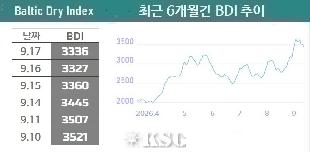
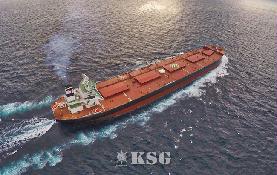
- 한화오션, 미국선급서 부유식 데이터센터 개념설계 인증 획득대한항공, 보잉 항공기 103대 도입 확정<스텔라데이지>호 침몰 폴라리스쉬핑 김완중 회장 금고 2년 ‘감형...동남아 4년만에 1000弗 돌파…컨운임지수 3600선 회복KSS해운, 추석 맞아 협력사 73곳에 대금 조기지급한진 노삼석·조현민 사장, 추석 특수기 앞두고 현장 점검BDI 3336포인트…케이프선 시장서 반등 기세 보여여수광양항만공사, 中 닝보저우산항과 항만 협력 논의인천항만공사, 권종오 신임 항만위원 선임지엘에스코리아, 임직원 한마음 체육대회 개최


스케줄 많이 검색한 항구

해사물류 통계 





COPYRIGHTⓒ 2014 KOREA SHIPPING GAZETTE. ALL RIGHTS RESERVED.

COPYRIGHTⓒ 2015
KOREA SHIPPING GAZETTE. ALL RIGHTS RESERVED.
0/250
확인