





-
뉴스
-

- A Decade of Trust, A New Course Ahead
- In 2026, STAR OCEAN LINE (SOL) proudly celebrates its 10th anniversary. Over the past decade, SOL has grown steadily, building its foundation on the trust and support of its customers and business partners while establishing a reliable presence in the global shipping a...
-
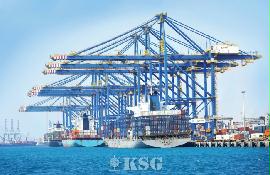
- DP World Revenue Rises 13.1% to $12.7Billion
- DP World reported revenue of $12.7 billion for the first half of 2026, up 13.1% year-on-year, as the strength of its global network helped the company navigate significant disruption to trade flows in the Middle East. Growth across Logistics, Marine Services and DP Wor...
-
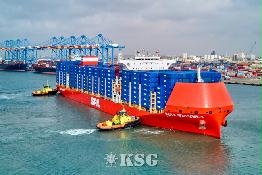
- PIL Partners with Celonis and WNS to Expand Process...
- Pacific International Lines (PIL), one of the world’s largest shipping container companies, has partnered Celonis, the global leader in Process Intelligence, and WNS, part of Capgemini, to expand its global Process Intelligence Centre of Excellence (CoE), acceleratin...
-
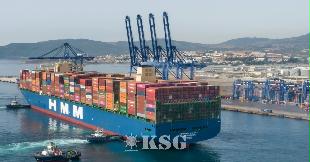
- HMM Launches New East Africa Service, Expanding Net...
- HMM has announced the launch of the Gulf - India - East Africa (GIA) Service, a new container route connecting India and East Africa, scheduled to commence in September.The GIA service is HMM's second African feeder network, operating under its Hub & Spoke strategy...
-
- 운항스케줄
-
오피니언


































2000-07-21 10:01
Imports Still Outpacing Exports


For the second half of this year, the Bank of Korea expects the flow o
f exports to slow due to the wavering American domestic economy and th
e falling exchange rate between the won and dollar, but total exports
to increase firmly with the help of semiconductors, and information te
chnology and communication instruments. Exports will amount to $88 bil
lion, resulting from an added $5 billion over the export amounts of th
e first half of this year. Further, rate of increases will be reduced
to 13 percent from the 25.7 percent of the first half.
Imports as well are scheduled to stay high in the second half of this
year due to an active domestic economy and high oil prices. Imports ar
e estimated to amount to $83.9 billion, showing an increase of $5.3bil
lion, as the rate of increase of imports is supposed to drop to 28 per
cent from 44.7 percent.
The trade surplus for the second half of this year is expected to be a
s much as $4.1 billion, which is very close to that of the first half
of this year. The annual trade surplus will amount to $8.5 billion, sh
rinking $15.4 billion from the $23.9 billion surplus of last year.
With respect to the first half of this year, exports on the basis of c
ustoms clearance recorded 83 billion dollars, mostly consisting of car
s, and industrial chemical products, an increase of 17 billion dollars
over the same period last year. Export increases are showing the high
est figures, 25.7 percent, since the second half of 1995. Imports incr
eased to 78.6 billion dollars from 54.3 billion dollars last year, bec
ause of increased consumer spending in both the export and domestic ec
onomies, and the sharp rise of international oil prices.
In spite of steady exports, imports are growing faster, so the trade s
urplus for the first half of this year is estimated to be a mere 4.35
billion dollars. Trade to Japan and the Middle East is deep in the red
, whereas other trade areas are still in the black. During this Januar
y to May, the trade deficit with Japan worsened due to the continuousl
y increasing imports of electronic accessories and machinery. That def
icit has expanded to 5.1 billion dollars from 2.9 billion dollars. Mea
nwhile, the trade deficit with Middle Eastern countries is still sever
ely in the red to the tune of 6.8 billion dollars, shooting up from 2
billion dollars for the same period last year.
f exports to slow due to the wavering American domestic economy and th
e falling exchange rate between the won and dollar, but total exports
to increase firmly with the help of semiconductors, and information te
chnology and communication instruments. Exports will amount to $88 bil
lion, resulting from an added $5 billion over the export amounts of th
e first half of this year. Further, rate of increases will be reduced
to 13 percent from the 25.7 percent of the first half.
Imports as well are scheduled to stay high in the second half of this
year due to an active domestic economy and high oil prices. Imports ar
e estimated to amount to $83.9 billion, showing an increase of $5.3bil
lion, as the rate of increase of imports is supposed to drop to 28 per
cent from 44.7 percent.
The trade surplus for the second half of this year is expected to be a
s much as $4.1 billion, which is very close to that of the first half
of this year. The annual trade surplus will amount to $8.5 billion, sh
rinking $15.4 billion from the $23.9 billion surplus of last year.
With respect to the first half of this year, exports on the basis of c
ustoms clearance recorded 83 billion dollars, mostly consisting of car
s, and industrial chemical products, an increase of 17 billion dollars
over the same period last year. Export increases are showing the high
est figures, 25.7 percent, since the second half of 1995. Imports incr
eased to 78.6 billion dollars from 54.3 billion dollars last year, bec
ause of increased consumer spending in both the export and domestic ec
onomies, and the sharp rise of international oil prices.
In spite of steady exports, imports are growing faster, so the trade s
urplus for the first half of this year is estimated to be a mere 4.35
billion dollars. Trade to Japan and the Middle East is deep in the red
, whereas other trade areas are still in the black. During this Januar
y to May, the trade deficit with Japan worsened due to the continuousl
y increasing imports of electronic accessories and machinery. That def
icit has expanded to 5.1 billion dollars from 2.9 billion dollars. Mea
nwhile, the trade deficit with Middle Eastern countries is still sever
ely in the red to the tune of 6.8 billion dollars, shooting up from 2
billion dollars for the same period last year.


선박운항스케줄
인기 스케줄
-
BUSAN
 LAEM CHABANG
선박운항스케줄 목록 - 선박운항스케줄목록으로 Vessel, D-Date, A-Date, Agent를 나타내는 테이블입니다. Vessel D-Date A-Date Agent Kmtc Pusan 08/30 09/08 Pan Con Sawasdee Sunrise 08/31 09/08 Sinokor Sawasdee Capella 08/31 09/08 KMTC -
BUSAN
ONAHAMA선박운항스케줄 목록 - 선박운항스케줄목록으로 Vessel, D-Date, A-Date, Agent를 나타내는 테이블입니다. Vessel D-Date A-Date Agent Sunny Canna 09/04 09/12 KMTC -
INCHEON
HONG KONG선박운항스케줄 목록 - 선박운항스케줄목록으로 Vessel, D-Date, A-Date, Agent를 나타내는 테이블입니다. Vessel D-Date A-Date Agent Kmtc Singapore 08/30 09/06 KMTC Starship Draco 08/31 09/16 KMTC Starship Draco 08/31 09/16 KMTC -
BUSAN
GUAM선박운항스케줄 목록 - 선박운항스케줄목록으로 Vessel, D-Date, A-Date, Agent를 나타내는 테이블입니다. Vessel D-Date A-Date Agent Kyowa Falcon 09/03 09/14 Kyowa Korea Maritime Apl Islander 09/06 09/14 Kukbo Express Apl Islander 09/10 09/15 Hyopwoon -
BUSAN
YAP선박운항스케줄 목록 - 선박운항스케줄목록으로 Vessel, D-Date, A-Date, Agent를 나타내는 테이블입니다. Vessel D-Date A-Date Agent Kyowa Falcon 09/03 09/20 Kyowa Korea Maritime Kyowa Stork 09/25 10/13 Kyowa Korea Maritime
- 출발항
-
- 도착항
-


많이 본 기사
- HMM, 원양항로 비중 낮추고 근해사업 강화한다고려대 바다최고위 8기 수료식 성료스타오션라인 창립 10돌 “고객중심 통합물류서비스 실현 박차”이스라엘 짐라인, 상반기 영업익 2000억…전년比 79%↓해운협회, 국적선사 AI 전환 돕는다…기술설명회 개최BPA, 신항 2-6단계 국산 트랜스퍼크레인 운송 착수UPA, 위험물 환적부두 확대 추진…물류비 절감 기대KIFFA, 경기도 해운물류 청년취업 아카데미 개강현대글로비스, 항공운송으로 국내 뷰티기업 수출 지원한다케이조선, 유럽·중동서 5100억 규모 화학제품운반선 6척 수주
- 광양경자청·순천大, 광양만권 입주기업 취업 지원 ‘맞손’팬스타그룹 크루즈 브랜드 ‘K 디자인 어워드’ 본상 수상해양환경공단, 습지의 가치와 중요성 알리기 총력신간/ 김명재 목포해양대 교수 <바다를 품은 길> 발간아태항만 수요 성장 계속된다…15년간 250조 투자 필요인천항만공사, 포워더 초청해 물동량 유치 나서YGPA, 광양항 우드펠릿 수입·유통 거점 육성세방익스프레스, 리튬배터리 항공운송 국제인증 취득CMA CGM, 부산-美서안 노선서 가오슝 추가 기항미래성장·AI·친환경 대응 강화…YGPA, 9월 조직개편 단행


스케줄 많이 검색한 항구

해사물류 통계 





COPYRIGHTⓒ 2014 KOREA SHIPPING GAZETTE. ALL RIGHTS RESERVED.

COPYRIGHTⓒ 2015
KOREA SHIPPING GAZETTE. ALL RIGHTS RESERVED.
0/250
확인