





-
뉴스
-
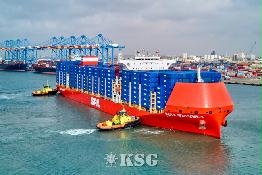
- PIL Partners with Celonis and WNS to Expand Process...
- Pacific International Lines (PIL), one of the world’s largest shipping container companies, has partnered Celonis, the global leader in Process Intelligence, and WNS, part of Capgemini, to expand its global Process Intelligence Centre of Excellence (CoE), acceleratin...
-
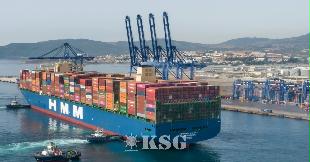
- HMM Launches New East Africa Service, Expanding Net...
- HMM has announced the launch of the Gulf - India - East Africa (GIA) Service, a new container route connecting India and East Africa, scheduled to commence in September.The GIA service is HMM's second African feeder network, operating under its Hub & Spoke strategy...
-
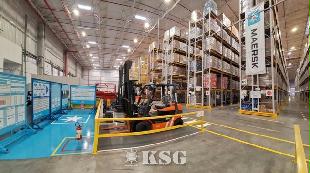
- Maersk Strengthens Integrated Logistics Capabilitie...
- Cabo de Santo Agostinho, Brazil – A.P. Moller – Maersk (Maersk) is strengthening its integrated logistics network in Latin America with expanded distribution and warehousing capabilities in Suape, Pernambuco, supporting customers seeking greater supply chai...
-
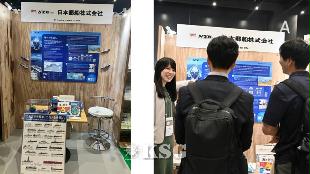
- NYK Showcases Nature Positive Initiatives at Intern...
- NYK participated as a platinum partner in Global Nature Positive Summit 2026 (GNPS2026), held in Kumamoto, Japan, from July 14 to 15. NYK took part in both a panel discussion and a breakout session, sharing its perspectives and initiatives toward realizing nature posit...
-
- 운항스케줄
-
오피니언






















2001-05-07 09:57
Debts deteriorate last year in Korean shipping firms


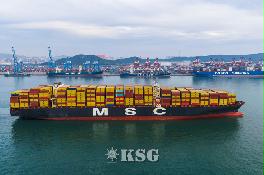
Vessel deliveries ordered before the currency crisis in 1997 - 98 and the Korean currency's depreciation have drastically dampened Korean overseas-going shipping firms' debt to equity ratios, even though they had outstanding sales last year.
The Maritime Logistics department at the Ministry of Maritime Affairs and Fisheries analyzed 38 Korean overseas going shipping firms' (registered as of 1999) balance sheets in 2000 and found that debt ratios shot up to 848 percent from 328 percent in 1999, in part due to vessel deliveries ordered before the outbreak of the Asian currency crisis, including ten LNG vessels, debt increases due to the won's depreciation, and losses in securities. The owned equity ratio also dropped to 10.5 percent in 2000, from 23.3 percent in 1999.
Last year, the assets of the 38 shipping companies increased to 1.96 trillion won, up 10.1 percent from 1.78 trillion won in 1999, while capital decreased to 2.75 trillion won, down 49.8 percent from 4.17 trillion won, and debts stood at 17.6 trillion won, up 28.5 percent from 13.7 trillion won in 1999.
Cargo transportation just posted 472 million tons, falling 2.1 percent under the 482 million tons in 1999 because of the slowing global world economy. The won's depreciation of 10 percent, however, contributed to rates incomes of 16.79 trillion won, showing a 9.4 percent increase compared with 15.35 trillion won in 1999, as well, operating profits jumped to 1.22 trillion won from 814.9 billion won in 1999.
Meanwhile, Hyundai Merchant Marine came out on top for the second year in a row with a 5.18 trillion won of sales, posting a 7.3 percent increase over that of 1999. The won's falling (1,145.4 won in 1999 to 1,259.7 won in 2000), on the other hand, caused a net loss on its balance sheet, making non-operating expenses surge by 76.9 percent in dollar exchange rate debts.
Cho Yang Line came out 4 billion won in the black, taking first place for net income. HMM, on the other hand, showed the biggest net loss, 310.5 billion won.
These sharp won exchanges seemed to negatively affect vessel acquisitions through credit loans abroad, said an official at MOMAF.
The Maritime Logistics department at the Ministry of Maritime Affairs and Fisheries analyzed 38 Korean overseas going shipping firms' (registered as of 1999) balance sheets in 2000 and found that debt ratios shot up to 848 percent from 328 percent in 1999, in part due to vessel deliveries ordered before the outbreak of the Asian currency crisis, including ten LNG vessels, debt increases due to the won's depreciation, and losses in securities. The owned equity ratio also dropped to 10.5 percent in 2000, from 23.3 percent in 1999.
Last year, the assets of the 38 shipping companies increased to 1.96 trillion won, up 10.1 percent from 1.78 trillion won in 1999, while capital decreased to 2.75 trillion won, down 49.8 percent from 4.17 trillion won, and debts stood at 17.6 trillion won, up 28.5 percent from 13.7 trillion won in 1999.
Cargo transportation just posted 472 million tons, falling 2.1 percent under the 482 million tons in 1999 because of the slowing global world economy. The won's depreciation of 10 percent, however, contributed to rates incomes of 16.79 trillion won, showing a 9.4 percent increase compared with 15.35 trillion won in 1999, as well, operating profits jumped to 1.22 trillion won from 814.9 billion won in 1999.
Meanwhile, Hyundai Merchant Marine came out on top for the second year in a row with a 5.18 trillion won of sales, posting a 7.3 percent increase over that of 1999. The won's falling (1,145.4 won in 1999 to 1,259.7 won in 2000), on the other hand, caused a net loss on its balance sheet, making non-operating expenses surge by 76.9 percent in dollar exchange rate debts.
Cho Yang Line came out 4 billion won in the black, taking first place for net income. HMM, on the other hand, showed the biggest net loss, 310.5 billion won.
These sharp won exchanges seemed to negatively affect vessel acquisitions through credit loans abroad, said an official at MOMAF.


선박운항스케줄
인기 스케줄
-
PYEONGTAEK
 SHANGHAI
선박운항스케줄 목록 - 선박운항스케줄목록으로 Vessel, D-Date, A-Date, Agent를 나타내는 테이블입니다. Vessel D-Date A-Date Agent Tian Hai Ping Ze 08/26 08/30 EAS SHIPPING KOREA Tian Hai Ping Ze 08/26 08/30 Doowoo Pacific Shenzhen 08/27 08/31 EAS SHIPPING KOREA -
INCHEON
COLOMBO선박운항스케줄 목록 - 선박운항스케줄목록으로 Vessel, D-Date, A-Date, Agent를 나타내는 테이블입니다. Vessel D-Date A-Date Agent Wan Hai 371 09/04 10/03 Interasia Lines Korea Starship Mercury 09/05 10/05 Interasia Lines Korea Wan Hai 308 09/11 10/03 Wan hai -
BUSAN
COLOMBO선박운항스케줄 목록 - 선박운항스케줄목록으로 Vessel, D-Date, A-Date, Agent를 나타내는 테이블입니다. Vessel D-Date A-Date Agent Esl Nhava Sheva 08/25 09/21 ESL Wan Hai 332 09/02 10/03 Interasia Lines Korea Wan Hai 521 09/03 09/26 Wan hai -
INCHEON
SHANGHAI선박운항스케줄 목록 - 선박운항스케줄목록으로 Vessel, D-Date, A-Date, Agent를 나타내는 테이블입니다. Vessel D-Date A-Date Agent Pegasus Glory 08/24 08/27 Sinokor Zhong Sheng Tuo Hai 08/26 08/30 Dong Young Pancon Glory 08/26 08/30 Dong Young -
BUSAN
JEDDAH선박운항스케줄 목록 - 선박운항스케줄목록으로 Vessel, D-Date, A-Date, Agent를 나타내는 테이블입니다. Vessel D-Date A-Date Agent Esl Nhava Sheva 08/25 09/29 ESL Wan Hai 371 08/30 09/27 Wan hai Ling Yun He 08/31 10/22 KWANHAE SHIPPING
- 출발항
-
- 도착항
-


많이 본 기사
- 글로벌 포워더 상반기 외형 성장…항공물류가 견인남재헌 해수부 차관, 인천신항 점검해운업계, 국내 양대 해양대에 발전기금 100억 전달엑소텍, 물류 자동화·로봇 도입 전략 세미나 개최‘길어지는 중동전쟁’ 日 ONE, 올 한해 영업익 1.6조 전망中 정저우-러 모스크바 특송 화물열차 개통HD현대重, 페루 상륙지원함 진수…해외 첫 함정 공동건조‘美·남미 호조’ 컨운임지수 6주만에 3300선 복귀대만 완하이라인, 1.1만TEU급 컨선 6척 발주…선단확충 박차해수부, 국립해양조사원장에 장묘인·중앙해심원 수석조사관에 오영록...
- 日 케이라인, 고베 대형 컨테이너터미널 9월 가동사무데라쉬핑 日 자회사 700TEU급 신조 컨선 발주송명섭 노조위원장, 해양교통안전공단 최초 6선 성공BPA, 을지연습서 부산항 비상대응체계 점검인천항 내항 1·8부두 재개발 본격화…연말 착공조선기자재연구원·한국해대, 미래 해양기술 경쟁력 강화 ‘맞손’인천공항, 군·경 합동 불법드론 테러 대응훈련울산항만공사·대한적십자, 취약계층에 건강돌봄 꾸러미 전달中 양쯔강서 친환경 하이브리드 크루즈선 운항 개시섬여행 취재기/ ‘1일 1섬의 매력’ 여수 금오도와 오동도


스케줄 많이 검색한 항구

해사물류 통계 





COPYRIGHTⓒ 2014 KOREA SHIPPING GAZETTE. ALL RIGHTS RESERVED.

COPYRIGHTⓒ 2015
KOREA SHIPPING GAZETTE. ALL RIGHTS RESERVED.
0/250
확인