





-
뉴스
-

- A Decade of Trust, A New Course Ahead
- In 2026, STAR OCEAN LINE (SOL) proudly celebrates its 10th anniversary. Over the past decade, SOL has grown steadily, building its foundation on the trust and support of its customers and business partners while establishing a reliable presence in the global shipping a...
-
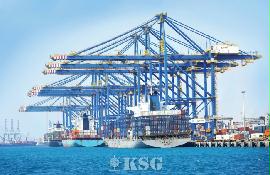
- DP World Revenue Rises 13.1% to $12.7Billion
- DP World reported revenue of $12.7 billion for the first half of 2026, up 13.1% year-on-year, as the strength of its global network helped the company navigate significant disruption to trade flows in the Middle East. Growth across Logistics, Marine Services and DP Wor...
-
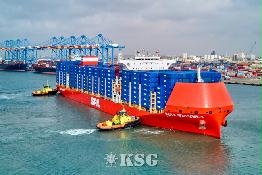
- PIL Partners with Celonis and WNS to Expand Process...
- Pacific International Lines (PIL), one of the world’s largest shipping container companies, has partnered Celonis, the global leader in Process Intelligence, and WNS, part of Capgemini, to expand its global Process Intelligence Centre of Excellence (CoE), acceleratin...
-
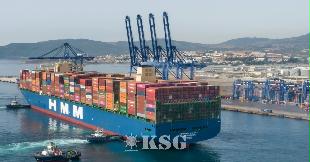
- HMM Launches New East Africa Service, Expanding Net...
- HMM has announced the launch of the Gulf - India - East Africa (GIA) Service, a new container route connecting India and East Africa, scheduled to commence in September.The GIA service is HMM's second African feeder network, operating under its Hub & Spoke strategy...
-
- 운항스케줄
-
오피니언





















2002-01-07 10:21
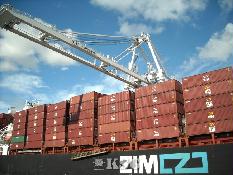
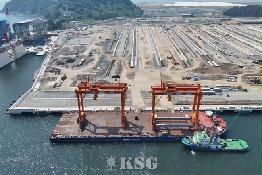
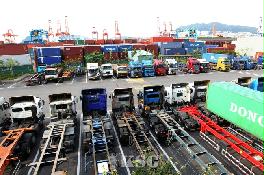
"Container terminal must be secured"


All container terminals in Korea are confronting difficulties in the wake of the global recession.
Most experts expect the global economy to recover in the second half of 2002, though only at a modest 2% increase. Developing countries are more likely to see a 1 - 2% increase.
The domestic economy may show a 3% increase. Though low-level increases are expected, there is widespread confidence that container cargoes will improve. As vessel over-supply continues with more new vessel deliveries, sea transportation rates are still unstable and dropping.
As for what is happening to the container-dedicated terminal that would require container vessels to be its best customer, drawing container vessels and forming marketing strategies has focused on productivity increases and service improvements for the last 2 - 3 months.
But, it is a different story now. Neither productivity nor service are regarded as important factors. Only cost lowering is regarded as key. Cost lowering strategies have to be clearly articulated by terminal operating companies. This is a substitute marketing strategy and is differentiated from other terminals.
What is the main reason for it? Shipping companies usually blame their difficulties on “the global recession”. Also, rash dumping between terminal operating companies has been regarded as a chronic practice.
Though shipping companies attribute their difficulties to the global recession, vessel oversupply is more likely responsible. Under the circumstances, shipping companies have tried to get over their financial difficulties through lowered terminal usage fees. The major problem here is excessive competition between terminal operating companies, instead of shipping companies delivering new vessels.
Terminal operating rates in the Port of Pusan are the lowest amongst competitive ports in East Asia. The Korea Maritime Institute (KMI) revealed that the main container-dedicated terminals in South East Asia, such as Hong Kong, Singapore, and Kaohsiung, charge three to seven times that in Pusan. Shanghai, a port starting later than Pusan, is twice as expensive as Pusan.
Stevedoring rates in the Port of Pusan are usually 20 ? 40% lower than its posted fee schedule. This is also embarrassing. The vessel entry ratio in the Port of Pusan is 7:3, foreign vessels to domestic vessels. Falling terminal usage is likely to forfeit opportunities to acquire foreign currencies. Terminal usage fees must be kept over costs. Competition with each other has to be healthy, and served productively.
Most experts expect the global economy to recover in the second half of 2002, though only at a modest 2% increase. Developing countries are more likely to see a 1 - 2% increase.
The domestic economy may show a 3% increase. Though low-level increases are expected, there is widespread confidence that container cargoes will improve. As vessel over-supply continues with more new vessel deliveries, sea transportation rates are still unstable and dropping.
As for what is happening to the container-dedicated terminal that would require container vessels to be its best customer, drawing container vessels and forming marketing strategies has focused on productivity increases and service improvements for the last 2 - 3 months.
But, it is a different story now. Neither productivity nor service are regarded as important factors. Only cost lowering is regarded as key. Cost lowering strategies have to be clearly articulated by terminal operating companies. This is a substitute marketing strategy and is differentiated from other terminals.
What is the main reason for it? Shipping companies usually blame their difficulties on “the global recession”. Also, rash dumping between terminal operating companies has been regarded as a chronic practice.
Though shipping companies attribute their difficulties to the global recession, vessel oversupply is more likely responsible. Under the circumstances, shipping companies have tried to get over their financial difficulties through lowered terminal usage fees. The major problem here is excessive competition between terminal operating companies, instead of shipping companies delivering new vessels.
Terminal operating rates in the Port of Pusan are the lowest amongst competitive ports in East Asia. The Korea Maritime Institute (KMI) revealed that the main container-dedicated terminals in South East Asia, such as Hong Kong, Singapore, and Kaohsiung, charge three to seven times that in Pusan. Shanghai, a port starting later than Pusan, is twice as expensive as Pusan.
Stevedoring rates in the Port of Pusan are usually 20 ? 40% lower than its posted fee schedule. This is also embarrassing. The vessel entry ratio in the Port of Pusan is 7:3, foreign vessels to domestic vessels. Falling terminal usage is likely to forfeit opportunities to acquire foreign currencies. Terminal usage fees must be kept over costs. Competition with each other has to be healthy, and served productively.


선박운항스케줄
인기 스케줄
-
PYEONGTAEK
 SHANGHAI
선박운항스케줄 목록 - 선박운항스케줄목록으로 Vessel, D-Date, A-Date, Agent를 나타내는 테이블입니다. Vessel D-Date A-Date Agent Pacific Shenzhen 08/28 08/30 Sinokor Tian Hai Ping Ze 09/02 09/06 Doowoo Tian Hai Ping Ze 09/02 09/06 EAS SHIPPING KOREA -
BUSAN
COLOMBO선박운항스케줄 목록 - 선박운항스케줄목록으로 Vessel, D-Date, A-Date, Agent를 나타내는 테이블입니다. Vessel D-Date A-Date Agent Wan Hai 332 09/02 10/03 Interasia Lines Korea Wan Hai 521 09/03 09/26 Wan hai Wan Hai 335 09/04 10/01 Wan hai -
INCHEON
COLOMBO선박운항스케줄 목록 - 선박운항스케줄목록으로 Vessel, D-Date, A-Date, Agent를 나타내는 테이블입니다. Vessel D-Date A-Date Agent Wan Hai 371 09/04 10/03 Interasia Lines Korea Starship Mercury 09/05 10/05 Interasia Lines Korea Wan Hai 308 09/11 10/03 Wan hai -
BUSAN
SHANGHAI선박운항스케줄 목록 - 선박운항스케줄목록으로 Vessel, D-Date, A-Date, Agent를 나타내는 테이블입니다. Vessel D-Date A-Date Agent Dongjin Enterprise 08/28 09/01 EAS SHIPPING KOREA Dongjin Enterprise 08/28 09/01 Dong Young Dongjin Enterprise 08/28 09/01 COSCO Shipping Korea -
BUSAN
APAPA선박운항스케줄 목록 - 선박운항스케줄목록으로 Vessel, D-Date, A-Date, Agent를 나타내는 테이블입니다. Vessel D-Date A-Date Agent Msc La Spezia 09/02 10/14 MSC Korea Msc Bettina 09/12 10/24 MSC Korea Msc Camille 09/16 10/28 MSC Korea
- 출발항
-
- 도착항
-


많이 본 기사
- 두핸즈 품고, 일본 크로스보더 물류 서비스 확대화물차 안전운임 7%↑…항만 전배운임 신설‘평균운임 두자릿수 상승’ HMM, 2분기 영업익 3541억…52%↑“여객선항로 공영화로 섬주민 삶의 질 개선”HMM, 원양항로 비중 낮추고 근해사업 강화한다KIFFA-IATA, ‘코리아 에어카고 데이’ 개최LX판토스, KAI 의뢰 방산물류 프로젝트 완료에버그린, 파나마 콜론 물류단지 100% 자회사로 전환동우국제, 창립 44주년 기념행사 개최美선사 맷슨 상반기 영업익 3100억…13% 성장
- 스위스 MSC, ‘네트워크 최적화 일환’ 미서안 노선 개편A Decade of Trust, A New Course Ahead 한화오션, 노르웨이·미국선급서 저탄소 해양플랜트 설계 개념승인 획득페덱스 국제무역창업대회서 한·인니 학생팀 우승DP World Revenue Rises 13.1% to $12.7Billion벌크선 시장, 全 선형 회복세에 FFA 시장도 강세아시아나IDT, 규범준수경영시스템 국제인증 획득현대글로비스, 항공운송으로 국내 뷰티기업 수출 지원한다스타오션라인 창립 10돌 “고객중심 통합물류서비스 실현 박차”고려대 바다최고위 8기 수료식 성료


스케줄 많이 검색한 항구

해사물류 통계 





COPYRIGHTⓒ 2014 KOREA SHIPPING GAZETTE. ALL RIGHTS RESERVED.

COPYRIGHTⓒ 2015
KOREA SHIPPING GAZETTE. ALL RIGHTS RESERVED.
0/250
확인